
Autism, Empathy, and Emotion: Separating Myth from Reality

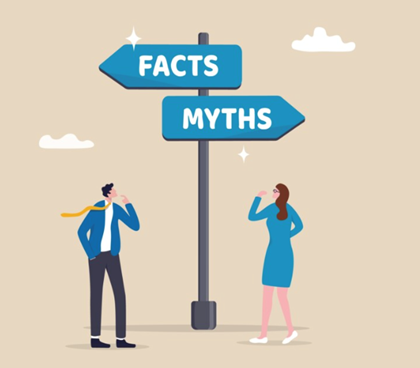
My name is Alex, I’m a Therapeutic Youth Mentor at A Mind of Your Own. In my role, I will be working closely with young people, offering practical, emotional, and relational support in ways that extend beyond the therapy room. Therapeutic mentoring sits somewhere between support work and therapy, it is about building trust, understanding lived experience, and walking alongside young people as they navigate everyday challenges.
Through my work and studies, I’ve developed a strong interest in autism and neurodiversity. Particularly in how common misconceptions can shape the way autistic people are understood and treated. Also being a support worker, I often see how these misunderstandings show themselves in subtle but powerful ways, e.g., school, family, friendships, and even in young people come to see themselves.
This is what lead me to write about two of the most common myths I hear in everyday conversations, myths that continue to circulate despite what research and lived experience consistently show us.
Autism is often surrounded by assumptions about how people think, feel and connect with others around them. Two common myths include that autistic people lack empathy and that they are unable to experience a full range of ‘normal’ human emotions. While this misconception may be common, it is not supported by research, which can be deeplyharmful.
At A Mind of Your Own, we take a neuroaffirming approach that recognises autism as a natural variation in how people experience and interact with the world. Understanding the realities of autism helps move us away from stereotypes and toward more compassionate, accurate, and individualised support.
Myth 1: “Autistic people lack empathy”
A long-standing misconception is that autistic people do not feel empathy. Research, and the voices of autistic people themselves, tell a very different story.
Empathy is not a single skill. It includes emotional empathy (feeling with someone), cognitive empathy (understanding another person’s perspective), and expressive empathy (showing empathy in socially expected ways). Autistic people may experience strong emotional empathy but have differences in interpreting social cues or expressing empathy outwardly (Kimber et al., 2024). When empathy is judged purely by eye contact, facial expressions, or verbal responses, autistic expressions of care can be overlooked.
Rather than asking whether autistic people have empathy, a more helpful question is: How do autistic people experience and express empathy, and how can we better understand that?
Myth 2: “Autistic people do not experience a full range of emotions”
Another common myth is that autistic people experience a limited emotional range. This idea is not only inaccurate but incredibly invalidating.
Autistic people experience the same broad spectrum of emotions as anyone else: joy, sadness, fear, anger, excitement, love, and grief etc. What may differ is how these emotions are processed, regulated, or expressed (Foster et al., 2026). For some, emotions can feel overwhelming or difficult to label. For others, emotional expression may not match social expectations.
Differences in emotional regulation are not the same as an absence of emotion! In fact, many autistic people experience heightened emotional sensitivity, particularly in response to sensory input, social stress, or unexpected change. Sometimes this can be misunderstood as “overreacting,” but actually this is a nervous system responding to overload.
Understanding this distinction is a key part of providing respectful, effective support. Which is something we prioritise!
Why myths matter
Misunderstandings about empathy and emotion can have real-world consequences. They influence how autistic people are treated in schools, workplaces, healthcare settings, and relationships. Also shaping how autistic individuals come to understand themselves.
When people are repeatedly told, directly or indirectly, that they lack empathy or emotion, this can lead to internalised shame, self-doubt, and missed opportunities for connection and support. These myths also place unrealistic expectations on autistic people to “prove” their feelings in neurotypical ways.
Moving beyond these assumptions allows space for more respectful, individualised support, where autistic people are supported as they are, rather than expected to ft into narrow definitions of emotional expression.
Moving toward understanding
Autism is not defined by a lack of feeling. It is a neurodevelopmental difference that influences how people perceive, process, and respond to the world around them.
By listening to both research and lived experience, and by challenging myths like these, we can replace stereotypes with understanding. This means creating spaces where autistic people feel seen, respected and supported, not for what they are assumed to lack, but for who they are.
If you’d like to connect with Alex or find out more, please contact us.
References
Foster, S. J., Dunn, D., Patel, S., Pinkham, A. E., Ackerman, R. A., & Sasson, N. J. (2026). Discrepancies between feeling and expressing: Perceptions of autistic and non-autistic emotional expressions by non-autistic observers. Autism: the international journal of research and practice, 13623613251415129. Advance online publication. https://doi.org/10.1177/13623613251415129
Kimber, L., Verrier, D., & Connolly, S. (2024). Autistic People's Experience of Empathy and the Autistic Empathy Deficit Narrative. Autism in adulthood, 6(3), 321–330. https://doi.org/10.1089/aut.2023.0001


